

Shopify vs WooCommerce: Which Is Better for Your Online Store in 2026?
Choosing the right eCommerce platform is one of the most important decisions when starting an online store. Shopify and WooCommerce are both popular options, but they approach eCommerce in different ways and suit different business requirements.
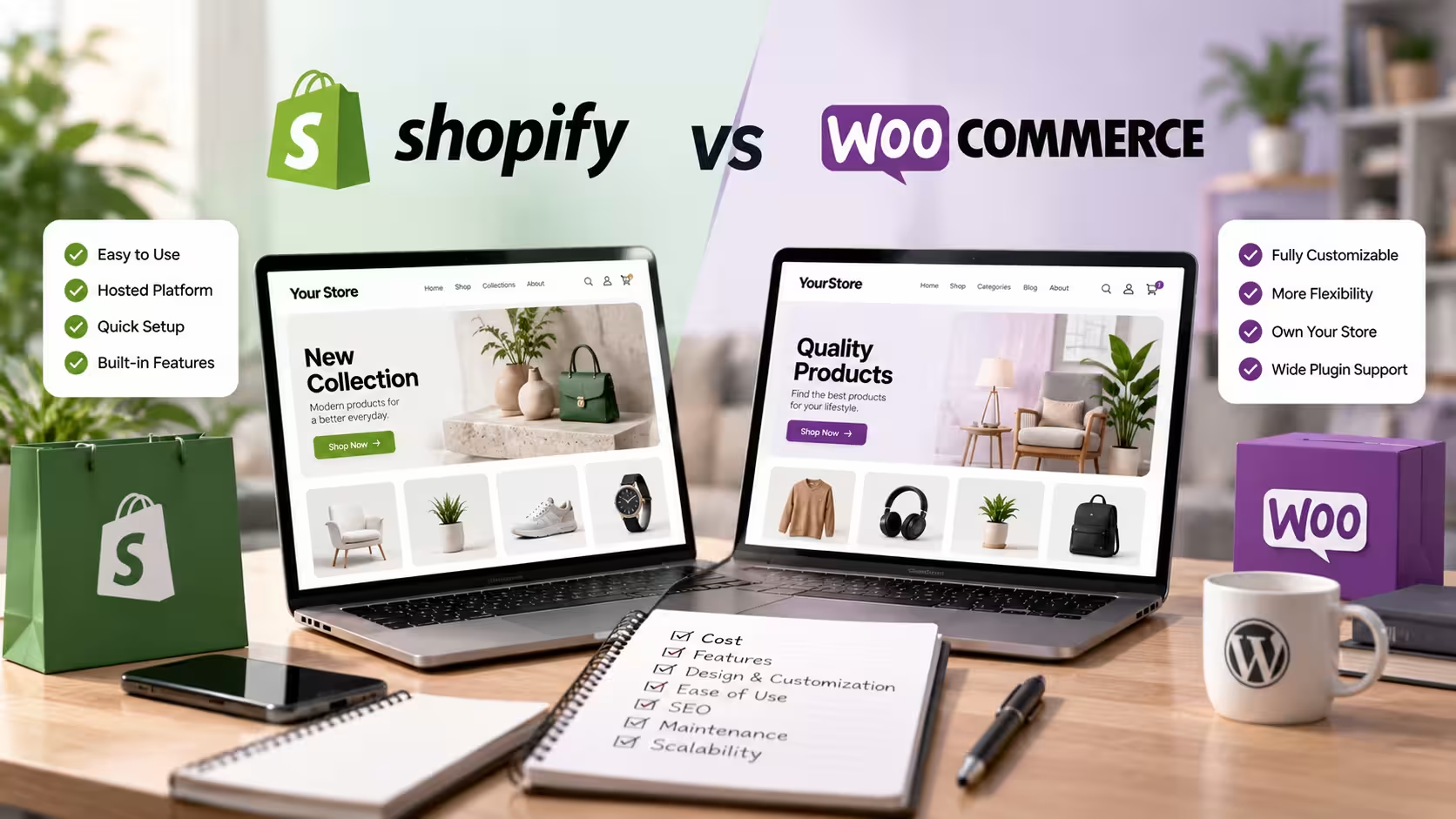
Shopify is a hosted eCommerce platform designed to provide many of the technical essentials of running an online store within one managed system. WooCommerce is an eCommerce solution built for WordPress and gives businesses greater control over their website, hosting and customization.
Neither platform is automatically the right choice for every business. The better option depends on your budget, technical requirements, product catalog, design needs, payment methods, integrations, maintenance preferences and long-term plans.
In this guide, we compare Shopify vs WooCommerce across the areas that matter when building an online store, including cost, ease of use, design, customization, SEO, maintenance, scalability and ownership.
Shopify vs WooCommerce: The Main Difference
The biggest difference between Shopify and WooCommerce is how the platforms are structured.
Shopify is a hosted platform. Hosting, core store infrastructure and many technical responsibilities are managed within the Shopify ecosystem.
WooCommerce works with WordPress and is typically installed on your own hosting environment. This gives you more direct control over the website, but it also means hosting, updates, maintenance and technical decisions need to be managed separately.
Shopify
A managed platform focused on making online store setup and day-to-day eCommerce management relatively straightforward.
WooCommerce
A flexible WordPress-based approach that gives businesses greater control over hosting, customization and website functionality.
Shopify vs WooCommerce: Quick Comparison
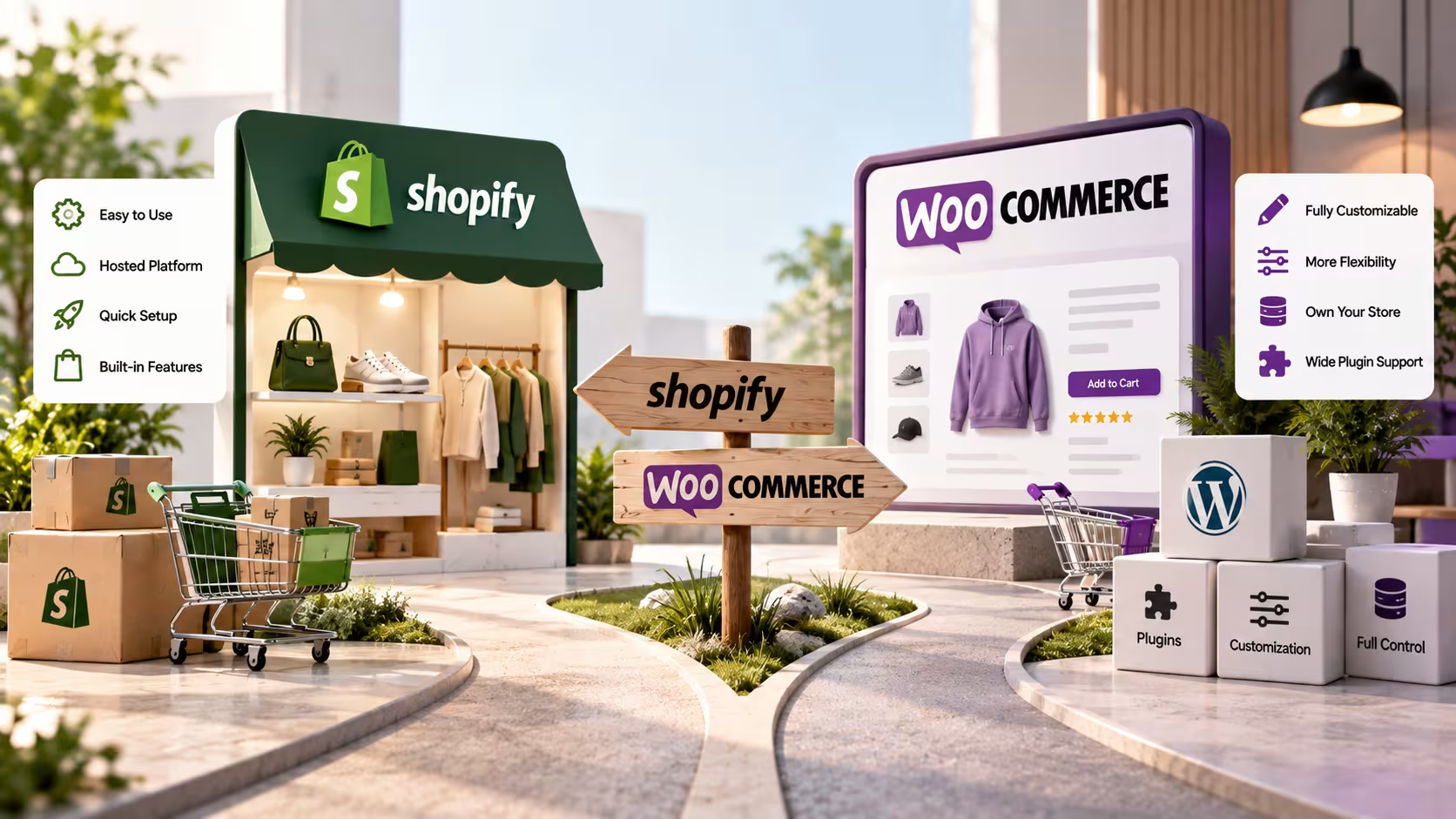
Before looking at each area in detail, here is a simple overview of how the two platforms differ.
| Feature | Shopify | WooCommerce |
|---|---|---|
| Platform Type | Hosted eCommerce platform | WordPress eCommerce plugin |
| Hosting | Included with platform | Selected and managed separately |
| Setup | Generally simpler to get started | Requires WordPress and hosting setup |
| Customization | Strong within the Shopify ecosystem | Highly flexible with WordPress access |
| Maintenance | Much of the platform infrastructure is managed | Website, hosting and updates require management |
| Pricing Model | Recurring platform subscription plus possible apps | Hosting, development and possible plugin costs |
| SEO | Good built-in foundations with platform limitations | Flexible SEO control through WordPress |
| Ownership & Control | Store operates within Shopify’s hosted platform | Greater control over hosting and website environment |
There is no universal winner.
Shopify can be a strong fit when simplicity and managed infrastructure are priorities, while WooCommerce can be attractive when flexibility and control over the WordPress environment are more important.
Shopify vs WooCommerce: Detailed Comparison
Ease of Use
For businesses that prioritize a managed setup, Shopify may feel simpler. Businesses comfortable with WordPress or working with a development team may find WooCommerce’s additional control useful.
Cost
This means comparing only the initial setup price can be misleading. It is better to compare the total cost of operating the store based on the functionality your business requires.
For a more detailed breakdown, read our eCommerce Website Cost in Pakistan 2026 guide.
Design and Themes
Both platforms can produce professional-looking stores. The quality of the final website depends heavily on the design, implementation and user experience rather than simply the platform name.
Customization and Flexibility
Greater flexibility can be useful, but it can also introduce additional technical responsibility. Customization should be driven by real business requirements rather than adding complexity without a clear purpose.
Apps and Plugins
With either platform, too many unnecessary apps or plugins can add cost, complexity and performance considerations. The store should use only the functionality it actually needs.
Payment Options
Payment requirements are especially important for businesses operating in Pakistan or selling to international customers.
Before choosing either platform, confirm which payment methods your business needs and whether those options are practically available for your company.
SEO
However, simply using WooCommerce does not guarantee stronger rankings, and using Shopify does not prevent a store from performing well in search.
SEO performance depends on factors such as store structure, content quality, technical setup, internal linking, product pages, category pages, authority and competition.
Explore our SEO Services for more information.
Website Performance
Both platforms still require sensible design and implementation. Large images, unnecessary scripts or excessive third-party functionality can affect the user experience regardless of platform.
Maintenance
Businesses without an internal technical team should consider how ongoing maintenance will be handled before choosing a platform.
Ownership and Control
Businesses that need specific server-level control or highly customized infrastructure may place greater value on the flexibility of a self-hosted solution.
Scalability
Both Shopify and WooCommerce can support growing online businesses, but scaling them involves different considerations.
Scalability should be considered in relation to expected traffic, catalog size, integrations and business operations rather than simply choosing the platform with the biggest feature list.
When Does Shopify Make Sense?
Shopify can be a practical option for businesses that want a dedicated eCommerce platform with much of the underlying technical infrastructure managed for them.
Shopify may be worth considering when:
- You want a hosted eCommerce platform
- You prefer a relatively straightforward store management experience
- You do not want to manage your own hosting environment
- Your required functionality is supported by Shopify or suitable apps
- You are comfortable with recurring platform and app costs
- You want to focus primarily on running the store rather than managing WordPress infrastructure
Explore our Shopify Development Services if you are considering Shopify for your business.
When Does WooCommerce Make Sense?
WooCommerce can be a strong option for businesses that want to combine WordPress content management with eCommerce functionality and greater control over the website environment.
WooCommerce may be worth considering when:
- You already use WordPress
- You want greater control over hosting and website files
- You need extensive customization
- Content marketing is an important part of the website
- You require WordPress-specific functionality
- You have technical support available for maintenance and updates
Explore our WordPress Development Services for WordPress and WooCommerce projects.
Shopify vs WooCommerce for Businesses in Pakistan
Pakistani businesses should consider the same core platform differences as businesses elsewhere, but local operational requirements can make some factors especially important.
Before choosing your platform, review:
- Payment methods available to your business
- Cash on delivery requirements
- Local courier and shipping workflows
- PKR pricing requirements
- International payment requirements if exporting
- Platform and app subscription costs
- Availability of technical support
- Future integration requirements
Do not select a platform only because another Pakistani store uses it.
Two businesses in the same market can have very different product catalogs, payment requirements, budgets and operational processes.
Shopify vs WooCommerce Cost in Pakistan
The total cost of either platform depends on more than website development.
A Shopify budget may include:
- Store design and development
- Shopify subscription
- Premium theme if required
- Paid apps
- Custom development
- Ongoing optimization and support
A WooCommerce budget may include:
- WordPress/WooCommerce development
- Domain and hosting
- Premium theme if required
- Premium plugins or extensions
- Custom development
- Maintenance, backups and security
For detailed eCommerce pricing factors, read: How Much Does an eCommerce Website Cost in Pakistan in 2026?
Which Platform Is Better for a Small Online Store?
A small business can use either platform successfully.
Shopify may appeal to businesses that want a managed environment and straightforward administration.
WooCommerce may appeal to businesses that already have a WordPress website, want greater control or expect to combine extensive website content with their online store.
The better decision depends on the store’s actual requirements, not simply its current size.
Which Platform Is Better for a Growing eCommerce Business?
Growth can introduce new requirements such as larger product catalogs, more traffic, advanced marketing, integrations, automation and more complex business operations.
Shopify can reduce some infrastructure management responsibilities because it is a hosted platform.
WooCommerce provides extensive technical flexibility, but a growing store may require stronger hosting and experienced technical management.
Before deciding, consider where you expect the business to be in the next few years and which functionality may become important as the store grows.
Shopify vs WooCommerce for Content and SEO
eCommerce SEO involves more than installing an SEO app or plugin.
Your platform should support a logical structure for:
- Product pages
- Category or collection pages
- Informational content
- Blog articles
- Internal linking
- Search-friendly page titles
- Image optimization
- Mobile usability
WooCommerce provides the wider WordPress content ecosystem, while Shopify includes blogging and content functionality within its hosted platform.
The platform matters, but content quality, site architecture and ongoing SEO strategy are more important than simply choosing one platform because it is considered “SEO friendly.”
Do You Need a Developer for Shopify or WooCommerce?
Both platforms allow businesses to create stores without developing every feature from scratch.
However, professional development can become useful when you need:
- Custom branding and design
- Better mobile shopping experience
- Advanced product structure
- Custom functionality
- Third-party integrations
- Performance optimization
- SEO foundations
- Tracking and analytics setup
A developer can also help prevent unnecessary apps or plugins from being added when a cleaner solution is available.
How to Choose Between Shopify and WooCommerce
Instead of asking which platform is universally better, ask which one fits the way your business needs to operate.
Answering these questions can give you a much clearer direction than comparing platforms only by their feature lists.
Plan the Complete eCommerce Project, Not Just the Platform
Choosing Shopify or WooCommerce is only one part of building a successful online store.
You should also consider your development budget, project timeline, design, product content, payment setup, shipping and ongoing marketing requirements.
These guides can help with the wider planning process:
Shopify and WooCommerce Development With AalaWeb
AalaWeb develops eCommerce websites for businesses that need professional, responsive and manageable online stores.
Depending on the project, our work can include:
- Shopify store development
- Shopify theme customization
- WooCommerce development
- WordPress customization
- eCommerce UI/UX
- Product and category setup
- Payment and shipping configuration
- Custom functionality and integrations
- SEO foundations
- Ongoing website improvements
Explore our eCommerce Development Services, Shopify Development Services and WordPress Development Services.
Final Thoughts
The Shopify vs WooCommerce decision should be based on your business requirements rather than choosing one platform because it is popular.
Shopify provides a managed, hosted eCommerce environment that can reduce some of the technical responsibilities involved in running an online store.
WooCommerce provides greater control over the WordPress environment and can offer extensive flexibility for businesses that need deeper customization.
Before making your decision, consider the complete cost, payment requirements, design, functionality, SEO, maintenance, ownership and future growth of your store.
If you are still unsure which platform fits your business, define your store requirements first. The right technology becomes much easier to identify once you know what the website actually needs to do.
Shopify or WooCommerce?
Tell us about your products, business requirements and future plans. Our team can review your project and help you choose a development approach that fits your online store.
Discuss Your ProjectFrequently Asked Questions
Shopify is a hosted eCommerce platform where much of the underlying infrastructure is managed within the platform. WooCommerce is built for WordPress and generally gives businesses greater control over their hosting, website files and technical environment.
Shopify can be easier for users who prefer a managed platform and do not want to handle hosting or WordPress maintenance. WooCommerce can also be manageable, particularly for businesses already familiar with WordPress, but it usually involves more technical responsibility.
Neither platform is always cheaper. Shopify has recurring subscription costs and may require paid apps, while WooCommerce can involve hosting, premium plugins, maintenance and development expenses. The total cost depends on the store requirements.
Both platforms can support SEO. WooCommerce offers extensive control through WordPress, while Shopify provides useful built-in SEO functionality within its hosted environment. Search performance ultimately depends on technical setup, site structure, content, authority and ongoing optimization.
Shopify can be used by Pakistani businesses, but companies should confirm that their required payment methods, shipping workflows, integrations and recurring platform costs fit their business model before choosing it.
WooCommerce can be suitable for Pakistani businesses that want a WordPress-based online store and greater control over their website environment. Hosting quality, maintenance and the required payment or courier integrations should also be considered.
Migration is possible, but products, customers, orders, content, URLs, integrations and SEO considerations may need to be carefully managed. Migration complexity depends on the size and customization of the existing store.
Yes, migration is possible, but the process should be planned carefully. Store data, design, functionality, integrations, URLs and SEO requirements may need to be recreated or migrated into the new WordPress and WooCommerce environment.
The answer depends on what “custom” means for your project. Both platforms support customization, but WooCommerce provides broader control over the WordPress and hosting environment, while Shopify customization takes place within Shopify’s platform architecture.
Yes. AalaWeb provides Shopify development, WordPress and WooCommerce development, eCommerce website development and related SEO and digital growth services.